
Is It Worth Buying Templates?
On white page syndrome, the real cost of starting from scratch, and why a small head start tends to pay for itself.
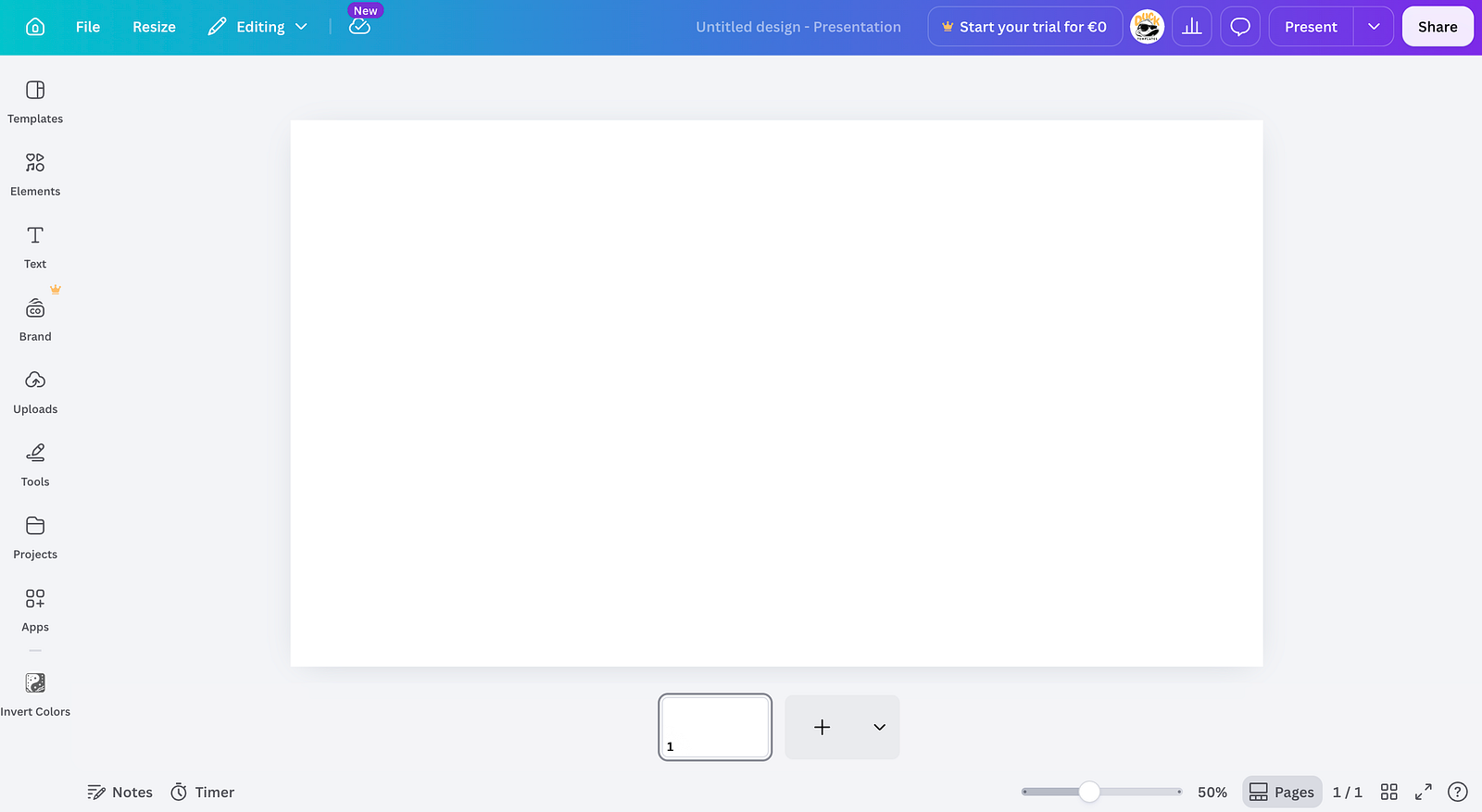
The most expensive thing in any project is the blank screen.
Not the software subscription. Not the ten-dollar template you were too proud to buy. It’s the blank screen, plus the three weekends you lose staring at it while promising yourself you’ll start properly on Monday.
I know this because I lived it with Canva.
The Canva story I’m slightly embarrassed about
For a long time I avoided Canva completely. I’d decided that design tools were for designers, opened the app a couple of times, looked at the empty canvas, and quietly closed it again. The problem wasn’t the tool. It was that I had no idea how to make something that looked good without first sacrificing a full day to learning alignment, spacing, and which fonts are allowed to sit next to each other.
So I did what reluctant people do. Nothing.
Eventually I gave up on willpower and bought a template. A cheap one. I opened it and the fog lifted almost immediately. The structure was already there. The fonts were paired. The spacing made sense. I swapped in my own text, changed the colors, nudged a few things around, and within about an hour I had something I was genuinely happy with.
Then came the part I didn’t expect. By tweaking someone else’s good work, I learned how the tool actually behaved. Where things lived, what could move, how the grid worked. The template turned out to be a tutorial I could touch.
White page syndrome costs more than the template
Blank page paralysis is real, and the reluctance behind it is rational. Starting from zero in a tool you don’t know means three jobs at once: learning the software, building the thing, and having the taste to make it look right. That’s a lot to ask of a Tuesday evening.
A template quietly removes two of those three. You’re left with the only part that was ever going to be enjoyable, which is making it yours.
People underestimate how long the “from scratch” route actually takes. A clean Notion dashboard, a Google Sheets model with formulas that don’t break when you breathe on them, a Canva layout that doesn’t look like a ransom note. These take hours, sometimes days, and a fair number of them get abandoned at the halfway mark and never spoken of again.
“But you could just build it yourself”
Sure. You could. You could also roast your own coffee beans and churn your own butter. The real question is whether the time is worth it for you, for this specific thing, right now.
Here’s the rough math. A template costs roughly the price of a sandwich. Building the same thing yourself costs a weekend you won’t get back, plus a very real chance you never finish at all. That half-built spreadsheet that’s been “almost done” since March is, hour for hour, the most expensive file on your computer.
Buying the template isn’t lazy. It’s refusing to be a sitting duck 🦆 for your own procrastination.
You might actually be good at this
There’s an upside nobody mentions. When you start from something that already works, the barrier drops low enough that you finally begin. And a surprising number of people, once they begin, take to it like a duck 🦆 to water. They discover they enjoy the fiddling, that they have opinions about layout, that they’re better at this than the blank screen ever let them find out.
The template gets you in the door. What you do once you’re inside is often a pleasant surprise.
There’s also the procrastination angle, which is the one I care about most. It is genuinely hard to keep putting off a job that someone has already done seventy percent of for you. Momentum is most of the battle, and a template hands you momentum on day one.
So, is it worth it?
For most things, yes. Get your ducks 🦆 in a row with something that already works, make it yours, and reclaim the weekend. The exceptions are rare: obviously, if the thing you’re building is the skill you’re trying to learn from the ground up, then by all means start from the blank screen. For everything else, you’re paying a sandwich to skip the worst part of the process.
The part where I admit my bias
You’ll have noticed I sell templates. So feel free to treat all of this with the suspicion it deserves.
But I was buying templates long before I ever sold one, and I still buy them today for tools I haven’t bothered to master. I’m not selling you a philosophy I don’t live by. The reluctant version of me, the one who kept closing Canva, would have saved himself a lot of wasted Sundays if he’d spent ten dollars sooner.
If you’ve read this far and found yourself quietly nodding, here’s my only ask. Next time you go looking for a template, whether it’s Notion, Google Sheets, or Canva, have a look at ducktemplates.com first. No hard sell. Just don’t lose another weekend to the blank screen.
Duck.